Free Home delivery for all orders of 299 SAR
Free Home delivery for all orders of 299 SAR
Free Home delivery for all orders of 299 SAR
Free Home delivery for all orders of 299 SAR
Free Home delivery for all orders of 299 SAR
Free Home delivery for all orders of 299 SAR
Free Home delivery for all orders of 299 SAR
Free Home delivery for all orders of 299 SAR
Free Home delivery for all orders of 299 SAR
Free Home delivery for all orders of 299 SAR
Free Home delivery for all orders of 299 SAR

Therefore, choosing a lotion for children isn’t a luxury or just for a pleasant scent; it’s a health decision that requires awareness and precision. In this article, we will delve together into the world of caring for little ones’ skin to learn how to choose the optimal product that provides protection and hydration without any side effects.
Before we apply any lotion to a child’s delicate skin, we must understand the fundamental difference between their skin and ours. Medically, an infant’s skin is characterized by the following:
High Permeability: The skin barrier is not yet fully developed, meaning chemical ingredients in any lotion can be absorbed and reach the bloodstream more easily.
Transepidermal Water Loss (TEWL): Infants lose moisture very rapidly, making the use of lotion a medical necessity to prevent dryness, not just a cosmetic step.
pH Level: A baby is born with a near-neutral pH, which then begins to shift to acidity (the acid mantle) to protect against bacteria. Choosing a lotion with an unbalanced pH could destroy this natural defense.
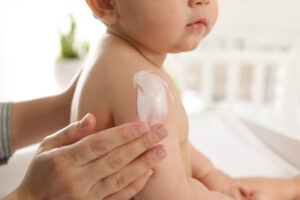
Before discussing how to choose a lotion, we must understand the nature of newborn skin. A baby’s skin loses moisture much faster than ours and is more prone to allergies and irritation from external factors like weather, fabrics, or even detergent residue on clothes. This highlights the importance of daily moisturizing as a protective shield that maintains skin elasticity and prevents dryness and eczema.
When you’re standing in front of pharmacy shelves, don’t be fooled by colorful packaging or pleasant fragrances. The secret always lies in the ingredient list. When searching for the best lotion for kids, look for and completely avoid the following:
Baby powder scent might seem tempting, but fragrances are the number one cause of skin allergies and respiratory issues in infants. It’s always preferable to choose a fragrance-free lotion or one that relies on very mild natural extracts.
These are chemical preservatives that could affect a child’s hormonal balance in the long term. The ideal product we consider a safe lotion must be labeled “Paraben-Free.”
Alcohol causes severe dryness and leads to skin cracking, which opens the door for bacteria and germs. Ensure the lotion you choose is completely free of ethyl alcohol.
“Friendly” Ingredients You Should Look For
Conversely, there are natural ingredients that work like magic on your child’s skin. When choosing a lotion, look for:
Shea Butter and Cocoa Butter: Provide deep, long-lasting hydration.
Coconut Oil or Sweet Almond Oil: Natural oils that nourish the skin without clogging pores.
Aloe Vera: To soothe any redness or irritation caused by diapers or heat.
Vegetable Glycerin: Which draws moisture from the air and traps it within the skin.
The presence of these elements in any lotion makes it an excellent choice for daily use after bathing.
As humans, we are emotionally drawn to baby scents, and companies know this well. But the medical truth states: “The less the scent, the greater the safety.” Lotion containing “Parfum” or “Fragrance” often contains phthalates used to stabilize the scent, which are substances suspected of affecting development. Therefore, always choose a lotion labeled “Fragrance-Free,” not just “Unscented” (as the latter may contain masking fragrances to hide the smell of chemicals).
Sun and Lotion
A common mistake mothers make is believing that lotion protects from the sun. In reality, some oils found in certain lotions can increase the skin’s sensitivity to light. If you’re going out in the sun, make sure the lotion is fully absorbed into the skin before going out, or use a sunscreen specifically designed for children over 6 months old.
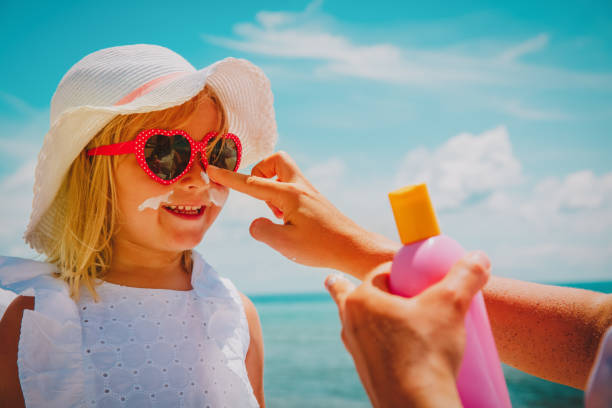
Many mothers ask: Is there a difference? The answer is yes.
Lotion: Characterized by its lightweight texture and quick absorption. It is most suitable for daily use and during summer, as a good lotion provides hydration without leaving a greasy layer.
Cream: Heavier in texture and used for cases of severe dryness or during winter.
Oil: Great for baby massage before sleep, but the skin may not absorb it as effectively as lotion.
To get the best results from using lotion, follow these steps:
Ideal Timing: The best time is immediately after taking the child out of the bath while their skin is still slightly damp. This helps trap water within the pores.
Warming: Place a small amount of lotion between your palms and rub them together to warm it before touching your child’s body, so they don’t feel cold or startled.
Gentle Massage: Use gentle circular motions. This not only moisturizes the skin but also boosts circulation and strengthens the emotional bond between you and your child.
Alongside using high-quality lotion, there are daily practices that maintain skin health:
Reduce Bath Time: Very hot water or sitting in water for too long strips the skin of its natural oils. Try not to let bath time exceed 10 minutes.
Cotton Clothing: Ensure your child’s clothes are 100% cotton, as synthetic fibers can increase the likelihood of lotion causing irritation if the skin can’t breathe.
Drinking Water: If your child is at the age of complementary feeding, hydrating the body internally clearly reflects on the softness of their skin, just as lotion does externally.
Recently, many mothers have begun to care not only about the content but also the packaging. Choosing a lotion with recyclable or sustainably made packaging is an investment in the future of the planet your child will live on. Additionally, some types of lotion come with easy-to-use pumps that prevent product contamination by bacteria from hands.
After using a particular lotion for a week, observe the following:
Does the skin texture remain soft for more than 6 hours?
Are there any small red bumps?
Does your child calm down during the massage with the lotion, or do they seem bothered?
If the product provides hydration without irritation, you may have finally found the perfect lotion for your child’s developmental journey.
Medical Answer: In the first few days, it’s preferable to avoid any chemical products. Newborn skin is covered with a natural protective layer called “vernix caseosa.” If there is severe dryness, it’s better to consult a doctor to prescribe a medical-grade lotion specifically for newborns, or to suffice with processed natural oils that don’t cause allergies.
The difference lies in the “oil-to-water ratio”:
Lotion for Children: Contains a high percentage of water, absorbs quickly into the skin, ideal for daily use and preventing mild dryness.
Cream: Slightly heavier, contains a higher percentage of oil, excellent for drier areas like knees and elbows.
Balm: Very thick consistency, intended for deep repair of extremely dry or cracked skin.
Not always. Even natural essential oils (like lavender or citrus oil) can cause irritation for some children with sensitive skin. The safest term is “Fragrance-Free” to ensure there are no triggers for respiratory or skin allergies.
No. Lotion is intended for daily moisturizing of healthy skin. Diaper rash requires a “Barrier Cream” containing zinc oxide to isolate the skin from moisture and friction. Using regular lotion on a diaper rash-affected area might increase irritation.
Medically, it’s recommended to apply it at least once daily immediately after bathing. However, in winter or if your child’s skin tends to be dry, you can repeat using the lotion two to three times daily on areas prone to dryness.
Absolutely not. Adult lotion contains whitening agents, acids (AHA/BHA), or high concentrations of preservatives that a child’s delicate skin cannot tolerate. Children’s lotion is specifically formulated to be purer.
In the end, choosing a lotion for children is part of the language of love and care you offer your little one. It goes beyond just being a product in a bottle; it’s a shield of protection, a means of physical communication, and a way to ensure your child’s comfort and deep sleep without itching or dryness. Always be the aware mother who reads beyond the label, and remember that your child’s skin always deserves the best.
Visit us on our website, Ivita, to consult with specialized doctors and choose the right and best product for your child, to achieve the best results and healthy skin. And because we care about your time, we offer home delivery service